





How Does An LED Heat Sink Dissipate Heat?
 Oct 16, 2025|
 The heat sink of an LED light is a meticulously designed "heat transport system." Its goal is to rapidly "transport" the heat generated by the LED chip into the surrounding air, preventing the chip from overheating and failing.

This process primarily relies on three fundamental physical methods of heat transfer: thermal conduction, thermal convection, and thermal radiation. Let's break down this process step by step:
The Three-Step Heat Dissipation Process
Step 1: Thermal Conduction - The "Internal Highway"
This is the starting point and foundation of heat transfer.
1. Heat Source: When powered and emitting light, LED chips generate significant heat. This heat concentrates within the tiny chip, forming a high-temperature "hotspot."
2. Pathway:
The chip is first soldered onto a metal substrate (typically an aluminum substrate or MCPCB). The substrate's base layer is insulating, beneath which lies a conductive aluminum layer. Its primary function is to rapidly conduct heat laterally away from the chip.
This metal substrate is then tightly bonded to the heat sink body using thermal grease. The thermal grease fills microscopic air gaps (air is a poor heat conductor), ensuring efficient heat transfer.
The heat sink itself is crafted from materials with high thermal conductivity (such as aluminum or, for higher-end solutions, copper). Heat rapidly disperses throughout the heat sink's internal structure, including every fin.
The core principle here is: through superior thermal materials and tight contact, heat is swiftly transformed from a "point" source into a "surface" source across the entire heat sink.
Step Two: Thermal Convection - "Interaction with Air"
This is the critical stage for ultimately dissipating heat.
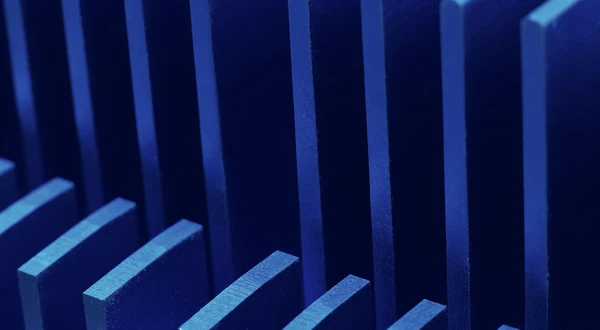
1. Increasing Surface Area: Heat sinks are designed with finned, columnar, or needle-like structures primarily to maximize the surface area exposed to air within a limited volume. A larger surface area allows contact with more air.
2. Air Flow:
Natural Convection: For low-power LED bulbs or fixtures, natural convection suffices. Air heated around the radiator becomes less dense and rises, drawing in cooler surrounding air to replace it. This creates a continuous, silent air circulation cycle that steadily dissipates heat. The "warmth" you feel with your hand is this heated air.
Forced Convection: For high-power LEDs like projectors, automotive headlights, or stage lights, natural convection is insufficient. Small fans are added to the heat sink, using forced airflow to dramatically accelerate heat dissipation. This is similar to adding a fan to a computer CPU.
The core principle here is: efficiently transferring heat from the metal heat sink to the moving air through a large surface area and airflow.
Step Three: Thermal Radiation - The "Invisible Helper"
Any object with temperature emits energy outward in the form of electromagnetic waves.
As the heat sink heats up, it also radiates infrared energy outward, dissipating a portion of its heat.
In LED thermal management, thermal radiation contributes relatively little (especially at low temperatures), but it does exist. Painting the heat sink surface black or dark colors enhances radiative cooling because darker surfaces have higher emissivity. However, for aesthetic and dirt-resistant reasons, most commercial heat sinks remain silver-white.

Summary: A Vivid Metaphor
Imagine the entire cooling system as a bustling port:
The LED chip is a "factory" continuously producing "heat cargo."
Thermal grease and the metal substrate are the "high-speed freight highways" connecting the factory to the main roads.
The heat sink body is the port's large storage area and docks.
Heat sink fins are rows of berths at the docks, significantly increasing simultaneous cargo loading and unloading capacity.
Air is the cargo ships transporting goods.
Natural convection relies on natural shipping via water currents and wind.
Fan-forced convection deploys tugboats and motors to accelerate loading/unloading and transportation.
If the port (cooling system) is well-designed, goods (heat) are swiftly transported away, allowing the factory (LED chip) to operate at full capacity 24/7 (emitting light). If the port becomes congested, berths are insufficient (small heat dissipation area), or no cargo ships are available (poor airflow), goods will pile up, eventually causing the factory to shut down (LED light decay or failure).
Therefore, an excellent LED heat sink design achieves the optimal balance among three elements: material (high thermal conductivity), structure (large surface area), and ventilation (promoting convection).
ZP HEATSINK is specialized in custom heatsink solutions for 20 years. Submit your requirement via https://www.zpheatsink.com/contact-us or email technical drawings to general@zp-aluminum.com to start the first step of your heat sink project.
From Drawing To Reality, ZP helps you to achieve.