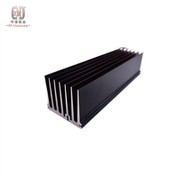
Cold forged Cob Heat Sink
Cold forged heat sink is forging at room temperature (lower than the metal re-crystallization temperature). The product has high shape and dimensional accuracy, good internal density, high strength, smooth surface, few processing steps, and is convenient for mass production.

- Product Introduction
Product Specification
|
Brand name |
ZP |
|
Process |
Cold forging |
|
Material |
Aluminum&Copper zipper fin+Aluminum base |
|
Temper |
T3-T8 |
|
Tolerance |
0.01 mm |
|
Shape |
Round |
|
Finishing |
Black anodized |
|
Size |
Custom size |
|
Extra process |
CNC turning+CNC machining |
|
Application |
LED light industry cooling |
|
Certificate |
ISO9001 SGS |
Technical Process
| Metals |
Metals minimum recrystallization temperature/℃ |
|
Copper(Cu) |
200-270 |
|
Aluminum(Al) |
100-150 |
High conductivity and high heat dissipation are then passed through a high-precision imported CNC machining center to ensure high dimensional accuracy and more stability, stable performance and easy surface treatment. According to the measurement, the heat dissipation performance of pure aluminum cold forging is 2 times higher than that of the same type of die-casting products, and 1 times higher than that of the same type of aluminum profile car products. It is the best solution for heat dissipation of high-power LED lighting.
Product Features
Good thermal conductivity
The cold forged heat sink can be extruded in one piece with pure aluminum AL1070 and 1050. The thermal conductivity of pure aluminum AL1070 is 226w/m.k, the thermal conductivity of alloy aluminum 6063 is 180W/m.k, while the thermal conductivity of ordinary die-cast aluminum A380 is only 96W/m.k. The larger the thermal conductivity, the faster the heat released by the LED can be conducted. It is beneficial to the overall heat dissipation of LED lights.
Good heat dissipation structure
The cold forged heat sink base plate and fins are integrally formed without any gap between them. The heat of the base plate can be conducted to the cooling fins without any obstruction. As for the aluminum parts of the car and the brazed parts, the heat dissipation bottom plate and the heat sink are riveted or brazed together after machining, and there must be a gap between them; indirect thermal resistance is generated, and the thermal expansion during the use of the lamp Cold shrinkage will also lead to the generation and enlargement of the gap, which will increase the thermal resistance, which is not conducive to the conduction of heat.
Large heat dissipation area
The thickness of the cooling fins of the cold forged radiator can be 0.7mm, and the spacing can be 1mm. The thin and many cooling fins greatly increase the contact area of the air, which is more conducive to air convection heat dissipation.
Variety of fins
The cold forging process can meet various shapes of fins such as cylinder, sheet, square column, hexagonal column, etc.
Small size and light weight
Compared with die-casting parts, car aluminum parts and brazing parts, pure aluminum cold forging radiators have the above advantages, and the same volume and shape can be used for heat dissipation of higher-power lamps (such as traditional 5w radiators, the same volume and shape. The pure aluminum forging radiator can do 7w). Therefore, the use of pure aluminum cold forging heat sinks will reduce the weight and volume of LED lamps, reduce the requirements for shapes such as lamp posts, reduce the overall cost, and make the products more competitive.
Product Application
Applied to light source heat sinks and LED heat sinks in green house.
Manufacturing Process
1, Material preparation and pretreatment
1)Alloy Ingredients
Cold forged radiator substrates typically use copper based alloys, such as chromium copper alloys (Cr content 0.25% -0.35%, Cu content 99.65% -99.75%). The raw materials need to use oxygen free copper rods and chromium coated core wires to ensure material purity and reduce the impact of impurities on thermal conductivity.
Pre treatment: Oxygen free copper rods need to be sawed into small sections of 100-240mm and subjected to high-temperature internal oxidation treatment (850-950 ℃, 2-3 hours) to improve material uniformity.
2)Melting and Casting
Place chromium cored wire and oxygen free copper rod in a graphite crucible, heat to 1150-1350 ℃ under argon protection, refine for 20-45 minutes to form alloy solution 1.
By continuously casting with a continuous casting machine, controlling the cooling water pressure (0.25-0.45MPa) and the casting speed (300-700mm/min), a round copper rod billet with a diameter of 20-30mm is obtained.
3)Surface Treatment
The cast billet needs to undergo phosphating and saponification treatment: acid washing (50-60 ℃), phosphating (70-80 ℃), and saponification (80-95 ℃) to reduce frictional resistance during subsequent cold forging processes.
2, Extrusion molding
1)continuous extrusion
Using a copper continuous extruder and Inconel 718 single hole mold, the extrusion speed (7-9m/min) and temperature (580-725 ℃) are controlled to process the round copper rod into copper bar 1.
During the extrusion process, it is necessary to pay attention to the temperature control of the mold (such as insulation for molds with a diameter of less than 200mm for more than 2 hours).
2)Sawing and pre forming
Cut the copper bars according to the product size and preliminarily shape them by heating (750-790 ℃) and multiple cold rolling (2-4 times).
3, Cold forging processing
1)Cold forging forming
Axial upsetting and radial elongation: The axial upsetting ratio is 1:6-8, with a single deformation of 5% -9%; The radial pull-out ratio is 1:3-5, and the precision molding of complex structures such as heat sinks and bases is achieved step by step.
Mold design needs to consider the shape of the heat sink (such as trapezoidal, V-shaped heat sink blades) and the depth of the ventilation groove (not exceeding 1/3 of the thickness of the heat sink).
2)Annealing treatment
After cold forging, annealing (700-750 ℃, holding for 3-5 hours) is required to eliminate internal stress and control hardness (55-75HRB).


Through cold forging process, we can produce accurate size, solid surface, reliable structure of the heat sink. And can make the heat sink fin higher, thus expanding the cooling area. One of the classic applications is in the field of leds.
ZP HEAT SINK is specialized in customizing and manufacuturing various heat sinks for 20 years. Conatact us via email: general@zp-aluminum.com for the professional solution for your heat sink projects.
Hot Tags: cold forged cob heat sink, China, suppliers, manufacturers, factory, customized, wholesale, buy, price, free sample, cold forging heatsink, Cold forged Cob Heat Sink, LED cold forging aluminum heat sink, Forged Copper Pin Fin Heat Sink, forged heatsink, Forged Heat Sinks